The Nature Nut
Published 5:30 am Thursday, February 26, 2026
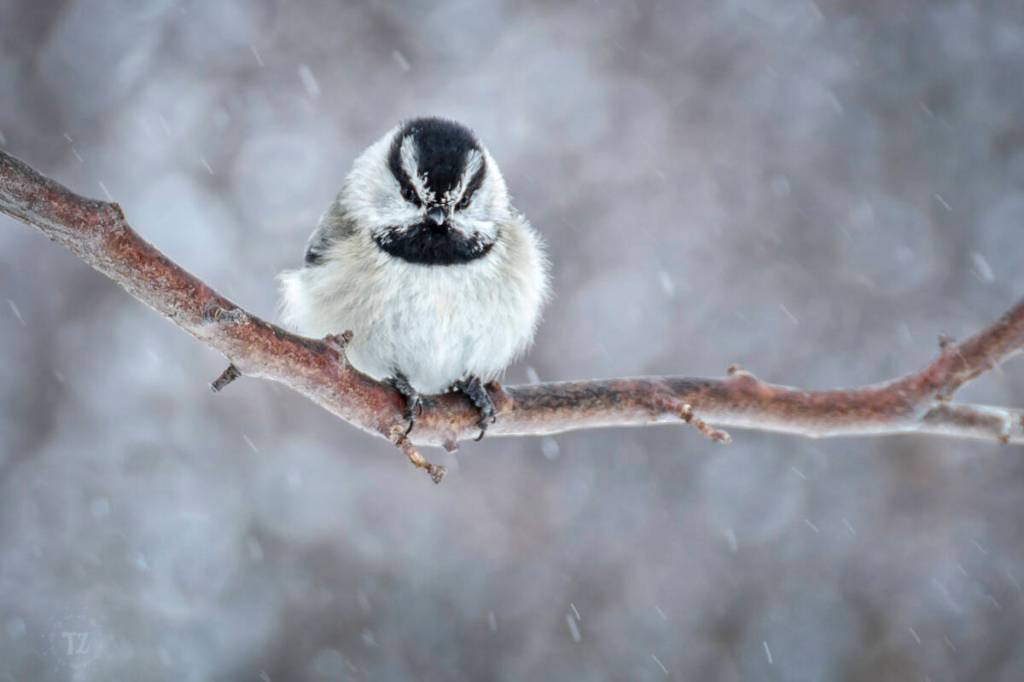
Black-capped chickadees and mountain chickadees are especially amazing. These tiny birds can withstand wickedly cold winter temperatures and always seem to know where the food is.
They must, for malnutrition is the major cause of winter mortality in chickadees. If they cannot get enough food, they cannot maintain their body temperatures and are unable to resist getting sick. It has been estimated that the time chickadees spend searching for food is twenty times greater in winter than that spent in warmer parts of the year. They rely on about 50 per cent animal food items (insects and spiders) and 50 per cent plant material (seeds and berries).
To survive, chickadees must know where the food is, and the other birds out in the bush watch them and know this. I remember being told to watch the chickadees if I wanted to see other birds in winter. Red-breasted nuthatches, juncos, pine siskins, other chickadees, woodpeckers, and even brown creepers and kinglets tend to follow the black-capped chickadees around.
Next time you are out in the bush and see chickadees, stop and watch to see what other species join them.
Travelling in mixed flocks is also a form of protection because the other birds recognize the chickadees’ alarm call. I can always tell there is a predator nearby when I see the chickadees freeze near a feeder.
Looking around, I usually see a pygmy owl or a sharp-shinned or Cooper’s hawk close by. Once I looked out at the feeder and wondered what was wrong with a chickadee that held a very ungainly pose, dead still for over 10 minutes in a shrub near our feeder.
Perched above it in an aspen was a pygmy owl.
To make sure they can survive the coming winter, chickadees go on a caching drive in the fall by storing masses of food. They tend to store the food items in as many different places as possible. This is sometimes called a “scatter hoard.”
One chickadee can stash up to one thousand seeds a day and remember where all its pantries are located later in the winter. To do this, their brains change in the fall. They shed some of the older neurons and create new memory cells. Their brain, specifically the hippocampus, which involves spatial memory, grows bigger in the fall and then shrinks again in the spring.
Chickadees also decrease their body temperature to conserve energy and go into a type of torpor at night. I remember late one chilly New Year’s Day, just before dusk, watching chickadees fly toward a large cottonwood and disappear.
I checked the other side of the tree, and there was a big hole. We assumed that the chickadees went in the hole for the night, even though a researcher once told me there was no evidence that chickadees spend the night in nest holes. I think the chickadees do what is best for them under the prevailing circumstances.
Occasionally, in the early morning, I have seen chickadees with very bent tails come to the feeder. I think they were all huddled together somewhere overnight, and the tails got a little misshapen.